Release time: 2026-06-25 13:52
Differential Diagnosis of Bipolar Disorder and Borderline Personality Disorder: An Evidence-Based Clinical Distinction
Introduction
In clinical practice, the differential diagnosis between bipolar disorder (BD) and borderline personality disorder (BPD) remains one of the most challenging distinctions in psychiatry. The significant overlap in symptomatology frequently leads to misdiagnosis, with some patients remaining undiagnosed for up to a decade—during which they may receive inappropriate pharmacological interventions, thereby missing the optimal window for effective treatment.
Core Distinction: Illness vs. Personhood
Bipolar disorder is fundamentally a mood disorder—a condition one acquires. Borderline personality disorder, by contrast, is a disorder of personality organisation—a mode of being that one embodies as a persistent pattern of functioning, rather than an episodic event.
The course of bipolar disorder is episodic. During manic episodes, patients present with pressured speech, reduced need for sleep, and impulsive spending behaviours; during depressive episodes, they exhibit psychomotor retardation, anhedonia, and feelings of hopelessness. Following an episode, patients typically return to their baseline level of functioning, with mood fluctuations following a tidal pattern.
Borderline personality disorder, in contrast, is pervasive and persistent. Patients demonstrate a pattern of interpersonal relationships characterised by extreme oscillation—alternating rapidly between idealisation and devaluation. Fear of abandonment is a core feature; even a brief delay in a partner‘s response to a message may trigger intense anxiety. Affective states are highly reactive to environmental cues: a compliment may induce transient euphoria, while a single cold response may precipitate significant emotional dysregulation.
Three Key Differential Dimensions
1. Trigger Patterns and Temporal Characteristics of Affective Instability
In borderline personality disorder, affective shifts are reactive, typically triggered by interpersonal stressors and lasting from hours to a few days. In bipolar disorder, however, affective episodes are endogenous and episodic, with manic or depressive phases lasting weeks to months, and they are not necessarily precipitated by external events.
2. Consistency of Personality Functioning
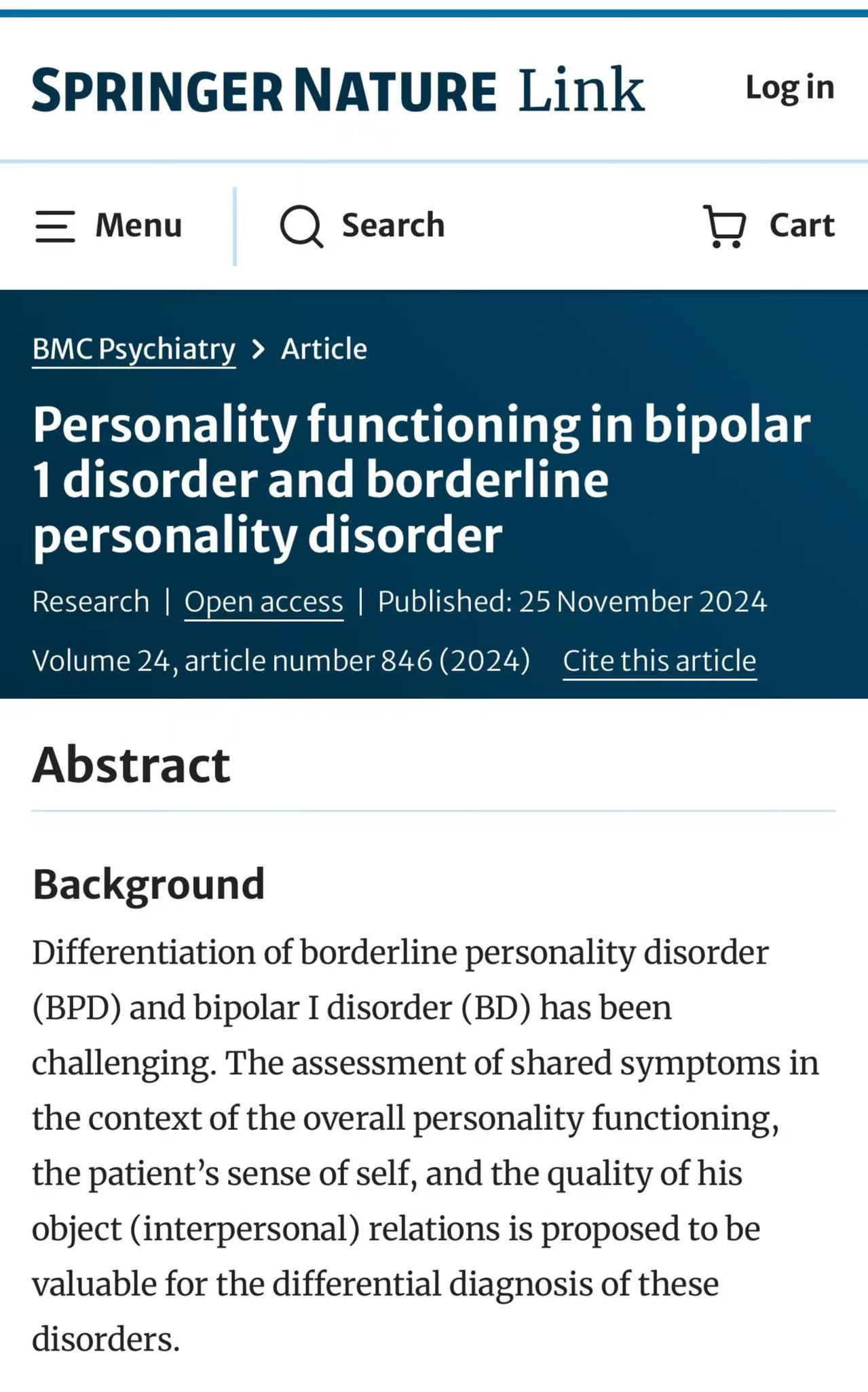
Patients with borderline personality disorder exhibit marked and persistent instability in identity, self-image, and interpersonal relationships. In contrast, although patients with bipolar disorder may experience mood-related fluctuations in self-appraisal during episodes, their core personality functioning remains relatively preserved during inter-episode periods. A 2024 study published in BMC Psychiatry found that borderline personality disorder was associated with significantly greater impairment across multiple domains—including identity, self-directed aggression, and other-directed aggression—compared to bipolar I disorder.
3. Fear of Abandonment
Fear of abandonment constitutes one of the diagnostic criteria for borderline personality disorder(DSM-5 Criterion 1). This feature is not a core symptom of bipolar disorder. Conversely, the expansive or elevated mood characteristic of manic episodes is unique to bipolar disorder and does not occur in borderline personality disorder.
Clinical Consequences of Misdiagnosis
The comorbidity rate between borderline personality disorder and bipolar disorder is approximately 20%. In clinical practice, many patients with borderline personality disorder are misdiagnosed with bipolar disorder and prescribed long-term mood stabilisers and antipsychotic medications, without receiving empirically supported psychological interventions—particularly dialectical behaviour therapy (DBT).
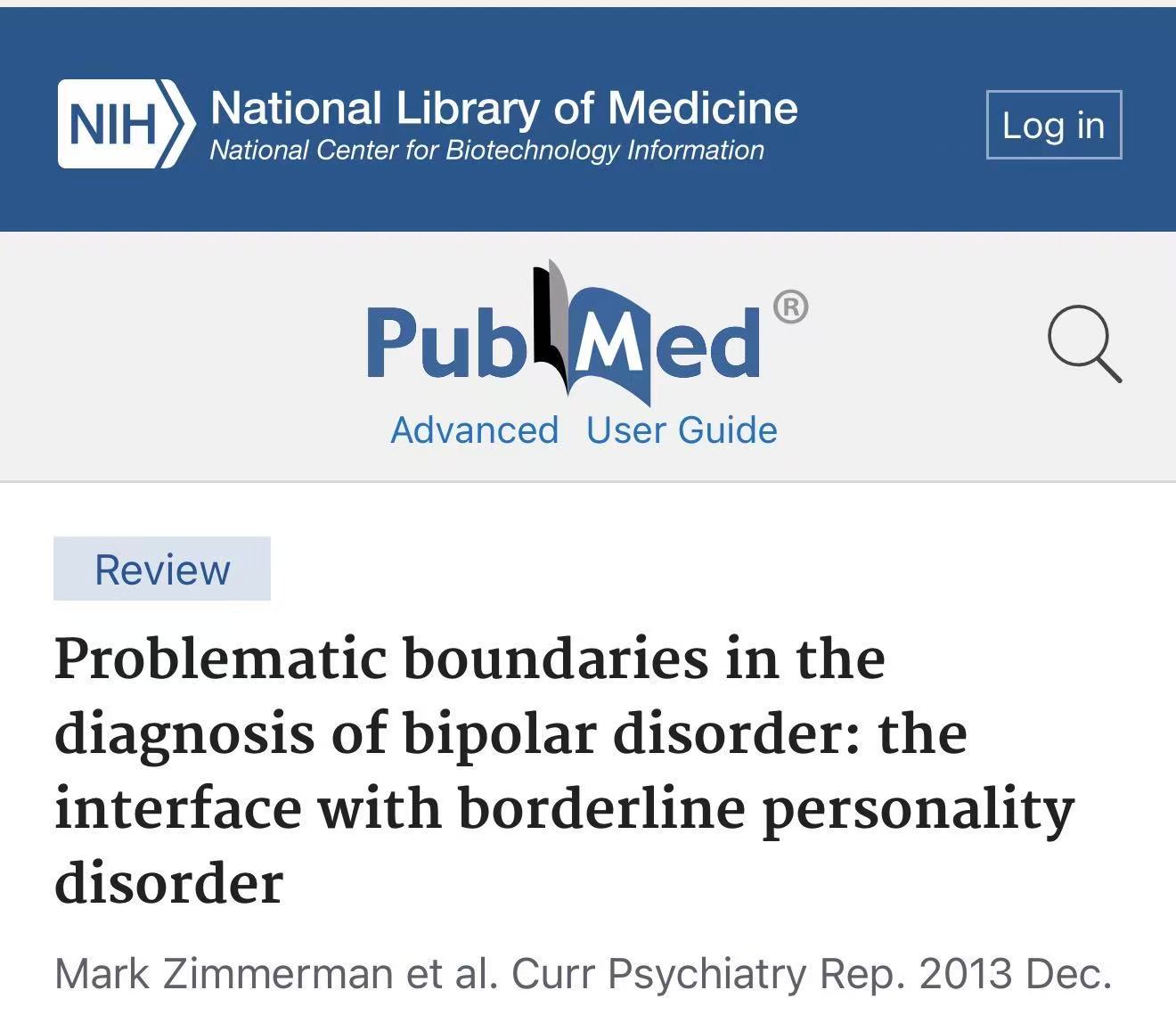
As a 2013 review in Current Psychiatry Reports observed, diagnosis should not be regarded as a “final conclusion” but rather as a dynamic clinical testing process, subject to revision as longitudinal observational data accumulate.
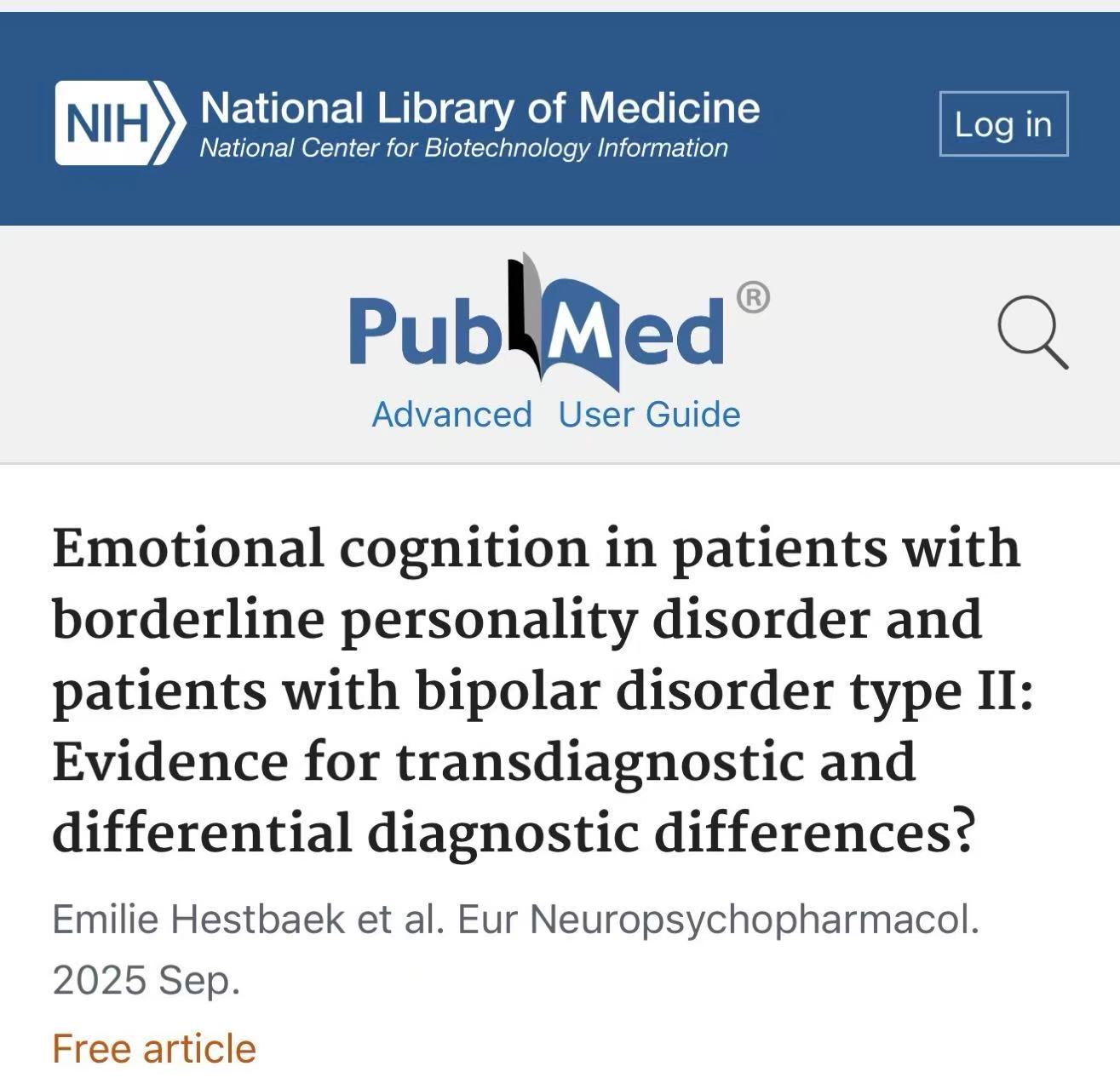
A 2025 study further demonstrated that patients with borderline personality disorder exhibit significantly slower reaction times in identifying facial emotions compared to patients with bipolar II disorder, suggesting measurable differences in affective cognitive processing between the two conditions.
Practical Recommendations for Differential Diagnosis
- Longitudinal observation: Assess mood patterns, episode frequency, and interpersonal functioning over a sufficiently extended period.
- Structured clinical interviews: Employ standardised instruments such as the Structured Interview of Personality Organisation (STIPO). A 2024 BMC Psychiatry study confirmed that STIPO demonstrates good discriminant validity in distinguishing between the two disorders.
- Evaluate affective patterns: Determine whether affective instability is pervasive and reactive, or episodic and endogenous.
Conclusion
Accurate diagnosis takes precedence over indiscriminate treatment. When the therapeutic direction is incorrect, even the most diligent interventions are unlikely to succeed. For individuals and families affected by these diagnostic labels, attendance at a formal psychiatric service for a comprehensive structured clinical assessment is strongly recommended, in order to obtain evidence-based treatment recommendations.
【Positive Guidance】 This article is based on DSM-5, MSD Manuals, and peer-reviewed research, and is intended to provide an educational overview of the differential diagnosis between bipolar disorder and borderline personality disorder. If you or someone you know is experiencing related difficulties, please seek a professional psychiatric evaluation.

Ting Hong Wang Ph.D.
Ph.D. in Psychology
IPMC Executive Dean